
Support for parents and families
Support for parents, carers, grandparents and other family members of children born with a cleft.

Learn all about cleft lip and palate in the United Kingdom, including why it happens and how it is treated.
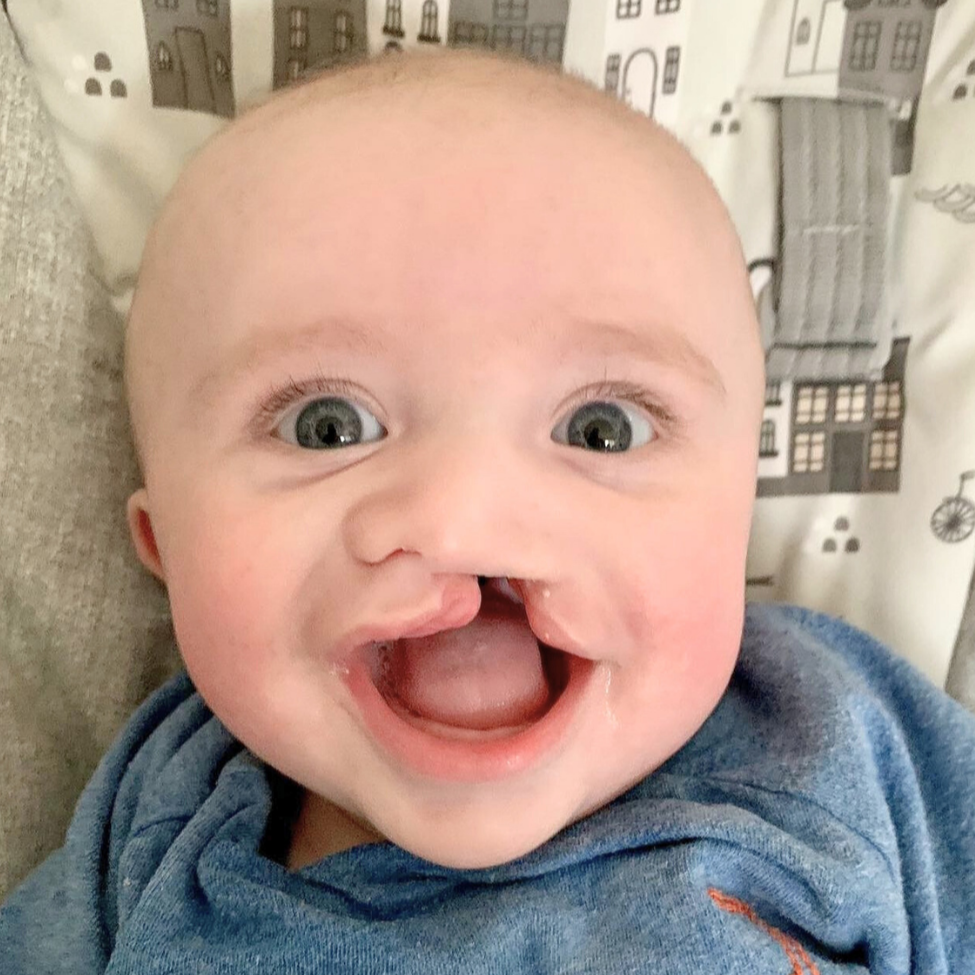 A unilateral (one-sided) cleft lip
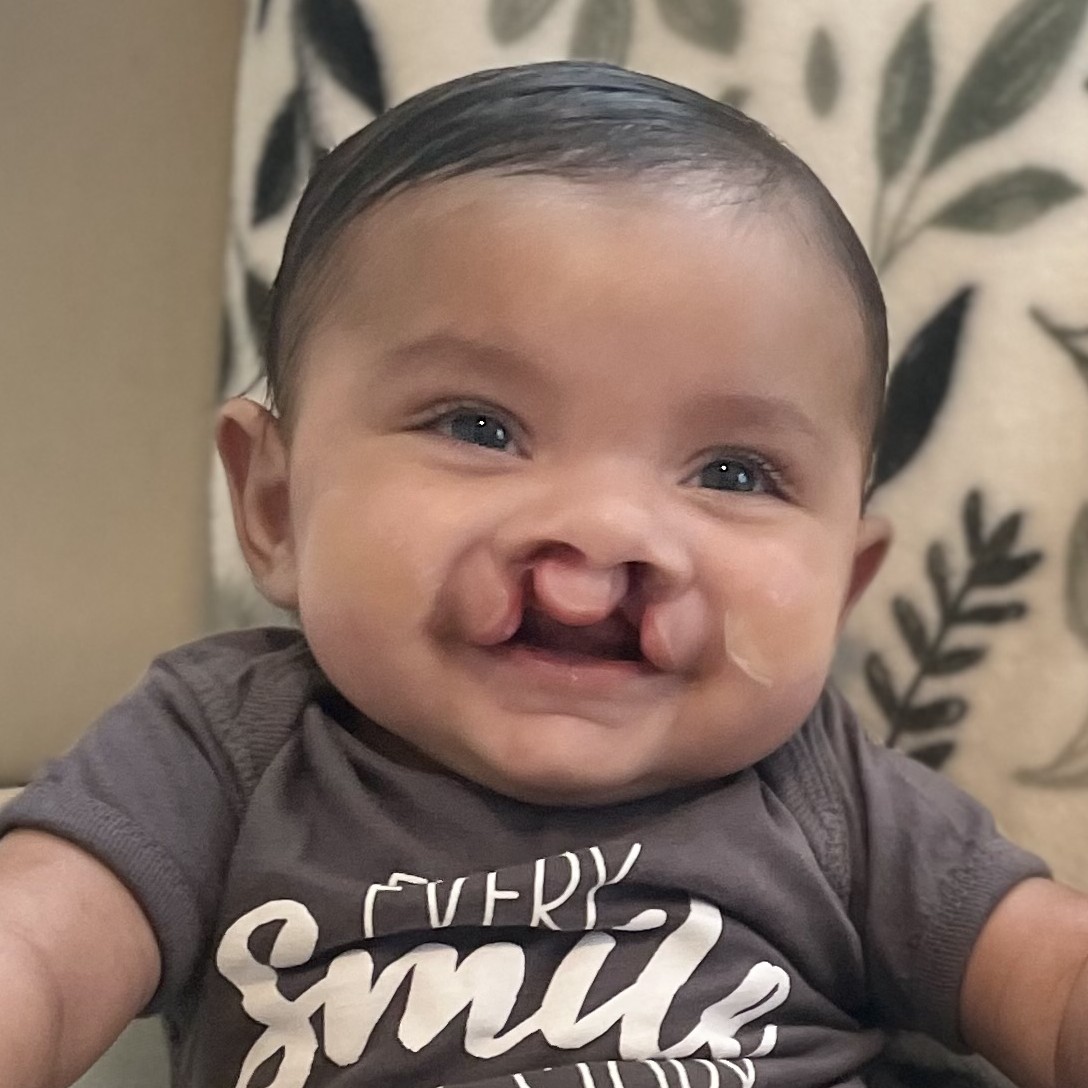 A bilateral (two-sided) cleft lip
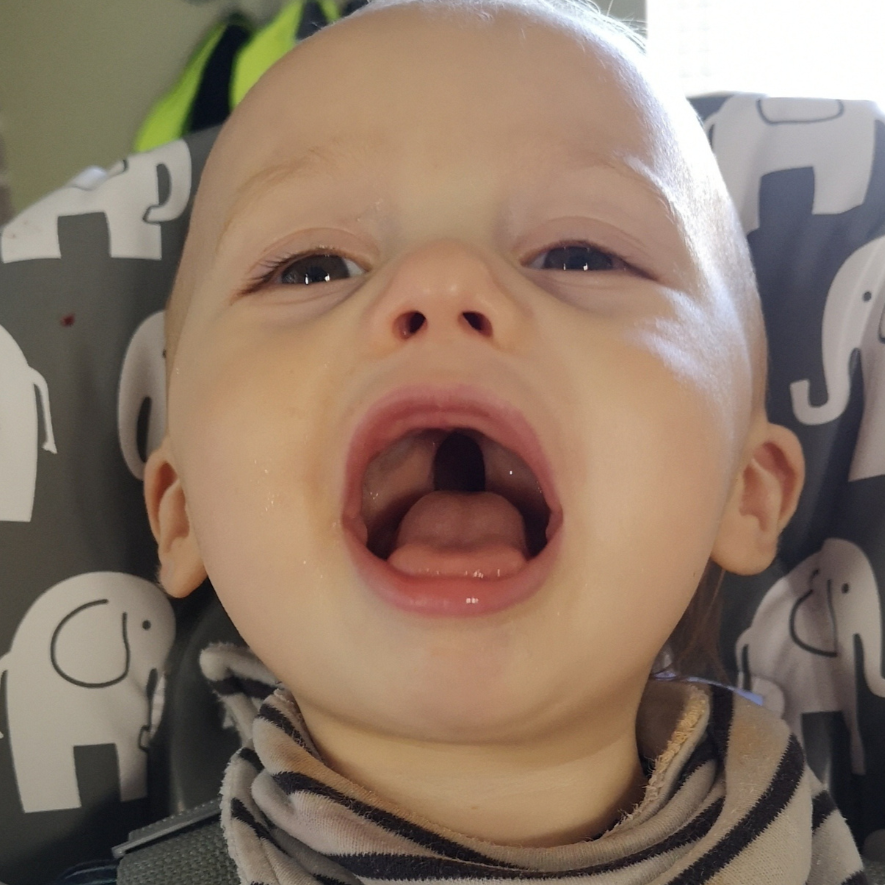 A cleft palate
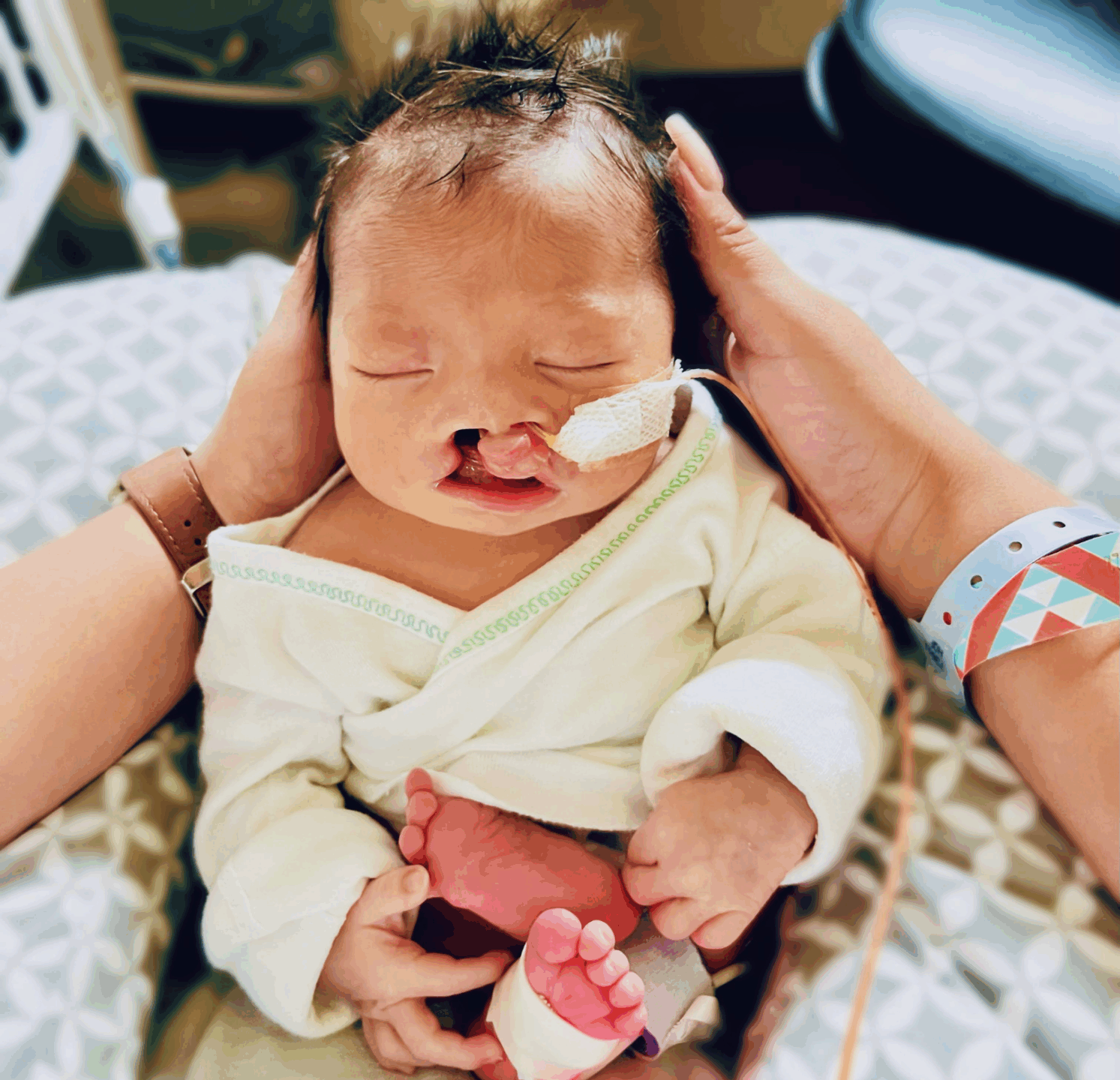 A cleft lip and palate with a feeding tube
A cleft lip is one or two gaps in the upper lip.
It can range from a little notch in the coloured part of the lip to a complete separation of the upper lip which can extend up and into the nose.
This can affect one side of the mouth (unilateral) or both sides (bilateral), and can be complete (meaning the cleft goes up into the nose) or incomplete.
A cleft lip can also affect the gum where the teeth come through. Again, this can range from a small notch to a complete separation of the gum.
A cleft palate is a gap in the roof of the mouth.
The back of the palate (towards the throat) is called the soft palate, and the front (towards the lips) is called the hard palate. A cleft can affect the soft palate or both the soft and hard palate.
Sometimes, there is a cleft in the muscles of the palate which is covered by the lining of the mouth. This is called a ‘submucous’ cleft palate. Because it’s not visible with the naked eye, it can be harder to diagnose at birth.
You can have a cleft lip, a cleft palate, or a cleft lip and palate. A cleft palate by itself is often called an isolated cleft palate.
We don’t fully understand what causes cleft lip and palate. There are lots of different factors which we think play a part, including both genetic and environmental influences.
It is extremely unlikely that a baby’s cleft was caused by anything the parents did or did not do during pregnancy. Even the healthiest, best-planned pregnancies can result in a cleft, and this is no one’s fault.
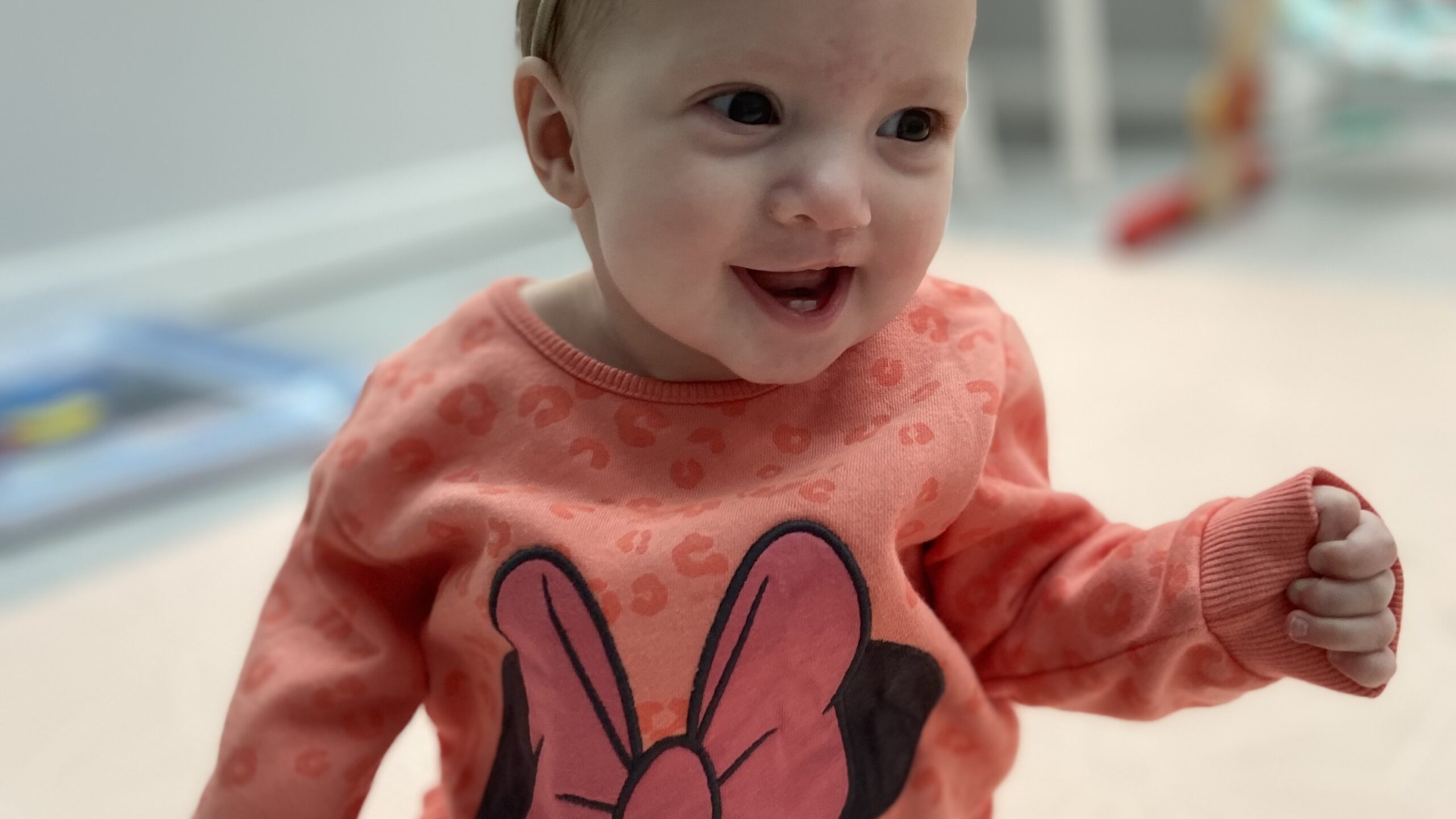
[After diagnosis] I spent the next 20 weeks of my pregnancy extremely anxious. Some days I would be super positive, and other days I would just cry not knowing what it would mean for our precious little one and also for us as a family.Eva's mum
Fast forward a year, and Eva is now 9 months old. I look back now and wish I hadn’t put so much worry on my shoulders, as the moment she was put in my arms all I saw was perfection. Cleft babies have the most amazing smiles which I miss so much already and will always look back on with so much pride and love (even though Eva’s forever smile is equally as infectious!).
Around one in 700 babies are born with a cleft. That’s around 1,200 every year in the United Kingdom alone.
On average:
The least common of these is a bilateral cleft lip and palate, where the cleft affects both sides of the upper lip as well as the palate. Around 9% of babies born with a cleft have a bilateral cleft lip and palate.
For the most up-to-date figures on babies born with a cleft in the United Kingdom, see the CRANE Database.
In the United Kingdom, comprehensive medical treatment is provided by NHS Cleft Teams. These are teams of cleft specialists, including plastic surgeons, nurses, psychologists, dentists and more, who are all dedicated to caring for people born with a cleft throughout their lives.
Every cleft is unique, just like every child, so the exact treatment needed will vary. Your Cleft Team will give you specific advice and information on the treatment you or your child will need, and will be able to answer any questions you have. The information on CLAPA’s website is general only and should not replace information from your Cleft Team.
Treatment can include:
Support for parents, carers, grandparents and other family members of children born with a cleft.
Find support services to help you connect and make friends, become more confident and feel more positive about your cleft.
Find support services and community for adults born with a cleft.