

Peer Support Service
CLAPA’s Peer Support Service is a quick and simple way to talk to a trained volunteer adult one-on-one about whatever’s on your mind.

Adults born with a cleft can return to NHS treatment at any time. This page walks through the common questions and concerns you might have about returning to cleft treatment as an adult.
Adults born with a cleft can return to NHS treatment at any time. This page walks through the common questions and concerns you might have about returning to cleft treatment as an adult.
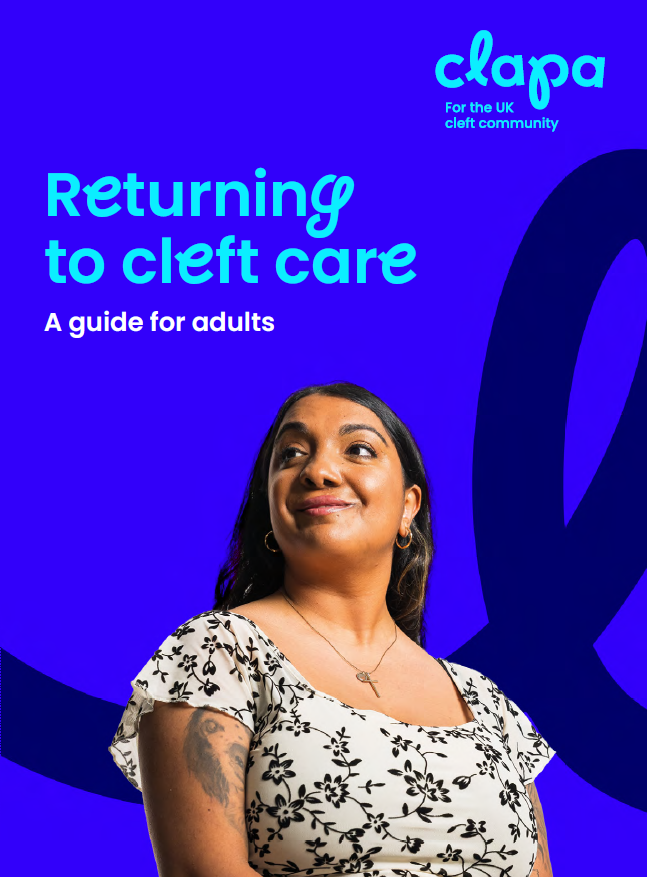
CLAPA has a free booklet available to adults in the UK looking to return to NHS cleft lip and palate treatment. You can request a printed copy in the post or download a digital version.
If you’re eligible to receive NHS treatment, and you were born with a cleft, you can see a specialist NHS cleft team for evaluation and treatment as necessary.
You can return to cleft care at any age. Some regular healthcare providers (like GPs and dentists) may not be aware of this and may advise patients that cleft treatment is only for babies and children, or that nothing can be done for adults. This is not the case.
The NHS England Service Specification for cleft lip and palate states:
“Any adult who has missed out on the care pathway should be assessed and treated according to the Clinical Service Specification in so far as that is clinically possible and appropriate regardless of age, according to clinical need and in an appropriate environment.”
Some treatments have more risks when you are older, or may not be possible for other reasons, but you can still get specialist assessment and advice.
This depends on your cleft and how it is affecting you. Common issues seen in adults include:
In general, the NHS Cleft Teams can only support you with issues which are related to your cleft. So, for example, if you have a dental issue which isn’t caused by your cleft and doesn’t require specialist treatment, you would need to seek help from a regular dentist.
You don’t need to know exactly what the issue is in order to get specialist evaluation from an NHS Cleft Team. They will talk to you about your concerns and suggest the best course of action, which might include treatment, or may involve being signposted to other services.
Most Cleft Teams in the UK require a referral from your GP or dentist, although some Cleft Teams will accept a self-referral. This will depend on where you live.
To get a referral from your GP or dentist, tell them you would like to be referred to your local Cleft Team for specialist assessment. This can be for a particular concern related to your cleft, or for a general assessment.
Some questions you may wish to ask yourself include:
It can be tempting to see surgery in particular as a fix-all for certain issues, but having realistic goals is important. All treatments carry risks that must be carefully considered, even if the biggest risk is feeling disappointed with the results.
The Clinical Psychologist at your local Cleft Team can help you to talk through your desires and expectations for treatment, surgical or otherwise, and see if this is the right path for you. They might arrange appointments for you with other members of the Cleft Team, or refer you to another service which can provide more appropriate and/or local support. It could be that they help you decide that you don’t want to pursue further treatment after all – it depends on your personal situation. Learn more about the role of the Clinical Psychologist in NHS Cleft Teams.
It’s a good idea to write down any questions you have before medical appointments, and take the time to make sure you get answers. It can also be helpful to take notes during appointments so you can refer back to these if you need to clarify anything later on.
You may want to talk to other adults who have had similar experiences to get a patient’s point of view before taking things further. See CLAPA’s support services for adults for more details.
When I was discharged nobody ever mentioned that I could ask for or have further treatment in future, I thought I had had all the treatment I was ever going to get and that I just had to live with how I looked.Adult born with a cleft
Most Cleft Teams in the UK require a referral from your GP or dentist, although some Cleft Teams will accept a self-referral. This will depend on where you live. Check our list of Cleft Teams for information on adult referrals.
To get a referral from your GP or dentist, tell them you would like to be referred to your local Cleft Team for specialist assessment. This can be for a particular concern related to your cleft, or for a general assessment.
It can be helpful to know the hospital in which your local Cleft Team is based and the name of the cleft service (e.g. ‘Trent Cleft Network’). You can share their details with your GP or dentist to help ensure they refer you to the right place.
Please note that a referral to a Cleft Team does not guarantee you treatment, but it will ensure you get the chance to talk to specialists who can give you the best possible advice.
Sometimes GPs and dentists are unfamiliar with how cleft care works and may incorrectly believe you’re not eligible for treatment as an adult.
Adults entitled to receive NHS services may return to cleft care at any age and may seek a specialist assessment from a Cleft Team for any reason related to their cleft, even for cosmetic concerns.
If your GP or dentist won’t refer you, they should explain why and what the next steps are. If you don’t think this is right and still want to see the Cleft Team, you can ask them to reconsider.
At this point it may be helpful to show them CLAPA’s letter to GPs and dentists
which explains why you’re eligible for a referral to a Cleft Team and how they can arrange this.
If your dentist or GP is still reluctant, ask them to phone the Cleft Team for advice. It may help to provide the contact
details of your local Cleft Team.
If they refuse to do this, contact your local Cleft Team directly and ask for their help. They will usually contact your GP directly.
You can also contact CLAPA for support.
Some Cleft Teams accept self-referrals, meaning you do not need to go through your GP or dentist. See here for an up-to-date list of which teams accept self-referrals.
You can also contact your Cleft Team directly by phone or email to ask if they accept self-referrals.
The process for self-referring to a Cleft Team will be slightly different for each team. It’s best to get in touch directly to ask about how you can do this.
When asking your GP or dentist to make a referral, it can help to provide them with details of your local Cleft
Team to make sure they send you to the right place.
Some adults returning to cleft treatment are mistakenly referred to a generic plastic surgery, maxillofacial or ENT department, either at the same hospital as the Cleft Team is in, or in a different hospital altogether.
If you think this may have happened, either call the number on your appointment letter, or ask at your appointment whether or not you have reached the adult cleft clinic. If it is not the cleft clinic, you can request a re-referral to the correct place.
You don’t need to know which specialist you want to see before you seek a referral.
Visit your GP or dentist and ask them to refer you to the Cleft Team for a general assessment of your concerns related to your cleft.
The discussion in your first appointment will help the Cleft Team understand your concerns and decide which specialists you need to see in order to continue with your
treatment, if appropriate.
Adults are entitled to return for specialist assessment under the Cleft Team at any age.
Some treatments have more risks when you are older. If that is the case, your Cleft Team will discuss these risks and any other options with you.
The length of time it takes for a referral to be picked up depends on where in the UK you are based, which specialist(s) you are waiting to see, and a variety of other factors.
You can ask your GP for a copy of the referral letter for your own records so you can keep track of dates and other details.
You can contact the Cleft Team directly at any time for an update on the progress of your referral.
Some Cleft Teams have significantly longer waiting lists for adult patients. In these cases, it is still worth seeking a referral, because a long waiting list can help the Cleft Team to make a case for getting more resources from the NHS.
Returning to the Cleft Team as an adult patient may be a little different to your memory of cleft services as a child. Different teams work with adults in different ways.
If your letter regarding your appointment does not specify what your first appointment involves, then you can always contact the Cleft Team and also ask them what it entails and how long it will take.
Your first appointment as an adult might be with the whole Cleft Team(also called a ‘multi-disciplinary team’ or MDT) all at once. Alternatively, it may be with one or two members of the team who will refer you onwards as necessary. If you have any concerns about this, please speak to your Cleft Team beforehand.
No matter which clinicians you see, you’ll be able to talk about any aspects of your cleft you’d like help with. They will take your concerns to other clinicians in the team as necessary and come up with a plan for your treatment.
If you have particular concerns or questions, it may be helpful to prepare a list of questions in advance and to take a notebook and pen with you. You may also wish to bring a friend or family member along to support you.
After that first appointment, your future appointments will usually only be with the clinicians who are actively involved with your treatment. In some cases, you may continue to have appointments with the whole Cleft Team if appropriate.
A list of people you may see in the multi-disciplinary Cleft Team can be found here.
You may be able to be seen by the same Cleft Team as long as you’re willing to travel. You will need to make sure you update your GP and/or Cleft Team with your new address.
If you want to switch to a Cleft Team closer to you, you will need to get a new referral to that team. This could be a referral from your current Cleft Team or through a GP or dentist.
Depending on where you are moving to, the Cleft Team may be able to accept a self-referral.
If you’re switching, make sure to let your existing Cleft Team know where and when you are moving.
Depending on the health system in the country you’re moving to, you may not be able to access cleft treatment as an adult, or you may have to pay for it.
Not all countries have dedicated Cleft Teams, so you may not get the same treatment as you would expect in the UK.
If you’re travelling on a visa, it’s worth checking if your visa includes cleft care, or if your travel insurance covers any emergency care that you might need related to your cleft.
If you’re under the care of a UK Cleft Team, talk to them about your plans to make sure they’ll be able to send any records to the right place. They may also advise on your travel plans with regards to any recent or upcoming surgeries.
Learn about the kind of surgical treatment available to adults born with a cleft, find answers to common questions, and read about what happens on the day of your operation.
Any treatment done outside of the NHS is private treatment. You usually have to pay for private treatment, although services paid for by a health insurer, or any free treatment through a charity, would also be considered private treatment.
Private treatment might include:
Please note that CLAPA cannot fund or part-fund any treatment costs.
Many NHS Cleft Consultants also operate privately so if you are considering private treatment, seeking out an NHS Consultant’s private practice could be a good place to start.
Whilst CLAPA always recommends treatment on the NHS, there are many reasons why you may consider treatment privately, particularly as an adult. If the timing of an operation is important to you, then you may consider having surgery privately to have it done quicker. Or if you want a second opinion, whilst you can get this on the NHS, you may want to consider a private consultation.
If you choose to see a clinician privately that doesn’t also work on an NHS Cleft Team, we recommend you ensure that they have appropriate experience in treating people born with a cleft.
If the procedure or treatment is cleft-related, it’s likely it would be available free of charge through the Cleft Team, so it’s worth asking them first.
If it’s not available on the NHS, it is still recommended you talk to your Cleft Team so they can make sure it’s the right thing for you.
Don’t feel guilty or worry that the Cleft Team will be offended by you seeking treatment elsewhere. NHS teams understand patients may choose private treatment for a number of reasons. Some may be able to recommend private clinicians with appropriate experience.
If you’re looking into private treatment because you’re unhappy with your current Cleft Team clinician(s), you can seek a second opinion from a different specialist within your team, or from another Cleft Team.
To do this, talk to your Cleft Team or GP about your concerns and what you would like to do. Be aware that if you request a re-referral to another team, you will usually be treated as a new patient, and this can involve a long wait.
This depends on your individual policy; it’s important to check the details and ask if you are unsure.
Some aspects of cleft care may be covered whilst others are not. For example, your policy may have a mental health provision but may not cover surgery. It’s always worth checking with your provider on a case-by-case basis.
In most cases, the NHS Cleft Teams are your best option for specialist, comprehensive treatment for concerns related to your cleft.
Your Cleft Team will have a good understanding of your medical history, individual needs, and the particular issues involved with treating a patient with a cleft. A private practitioner may not have this understanding, and may make recommendations based on incomplete information.
It may be disappointing if your Cleft Team refuse to perform any more surgery for a particular issue. However, if you wish to seek surgery from elsewhere, carefully consider the risks in going against your team’s recommendations.
If you do decide to seek private treatment, make sure your private practitioner is informed about the reasons behind the Cleft Team’s decision so this can be taken into account.
If you’re unhappy with what your Cleft Team have told you, we would recommend seeking a second opinion from another Cleft Team before considering private care.
It’s important to understand your hopes and expectations for the treatment you’re seeking and to manage these appropriately. Even if the procedure is a success, there’s always a risk you’ll find yourself disappointed with the results of treatment.
Your Cleft Team Psychologist can help talk you through this, even for private treatment.
If a private practice is recommending a treatment which your Cleft Team haven’t recommended, make sure you understand the reasons behind this and that you have enough time to think it over before agreeing to anything.
Private practices are generally run as businesses, so it is often (not always) in their best interests for you to have more treatment and therefore spend more money. It’s important to remember your own goals for treatment and give yourself time and space to carefully consider any options available.
Most healthcare professions in the UK are protected titles. This means that a practitioner must be registered with a recognised professional body to be able to call themselves a practitioner and to practice in the UK, including in private practice. These professional bodies include the General Medical Council, Nursing & Midwifery Council, Health & Care Professions Council (HCPC), etc.
If someone has the title ‘Dr’, this does not necessarily mean they are a medical doctor. Some people who use the title ‘Dr’ have a non-medical professional doctorate degree for a different clinical profession (e.g. dentists and clinical psychologists). Others may have an academic PhD that does not relate to clinical practice.
Surgeons who do have a medical degree (so were once called ‘Dr’), traditionally revert to using the title Mr/Mrs/Ms if they complete their training in the UK.
A good clinician will make their job title and qualifications clear and will not be offended if you ask them to clarify this.
Some practitioners are not health professionals and do not have to be registered with the HCPC. This includes beauticians, who may perform procedures such as lip fillers or lip tattooing, or nutritionists who give dietary advice. In these professions, there are vast differences in the amount of training different practitioners have had, so you want to be sure you are with someone reputable who has performed your procedure many times before.
Some local authorities regulate beauty salons, many others do not. Contact your local authority if you have any questions about a particular beauty salon.
The practice should explain exactly what follow-up care is included in the cost of your treatment and what will happen if things don’t go as planned, including any potential extra costs.
You should also be told what to do if you start experiencing problems suddenly or out of hours. Some treatments are more complicated or need to be performed differently when
somebody has been born with a cleft. Make sure you feel comfortable that the practitioner understands, and is experienced with, cleft.
CLAPA’s Peer Support Service is a quick and simple way to talk to a trained volunteer adult one-on-one about whatever’s on your mind.
About CLAPA’s dedicated counselling service for adults who were born with a cleft.

Find support services and community for adults born with a cleft.
Complete this form to get a copy of this guide in the post. You can request a guide for yourself on on behalf of someone else.